
What’s in the Yard: The High-Spanning Hardwoods of Salisbury’s Munitions Factory
June 2026
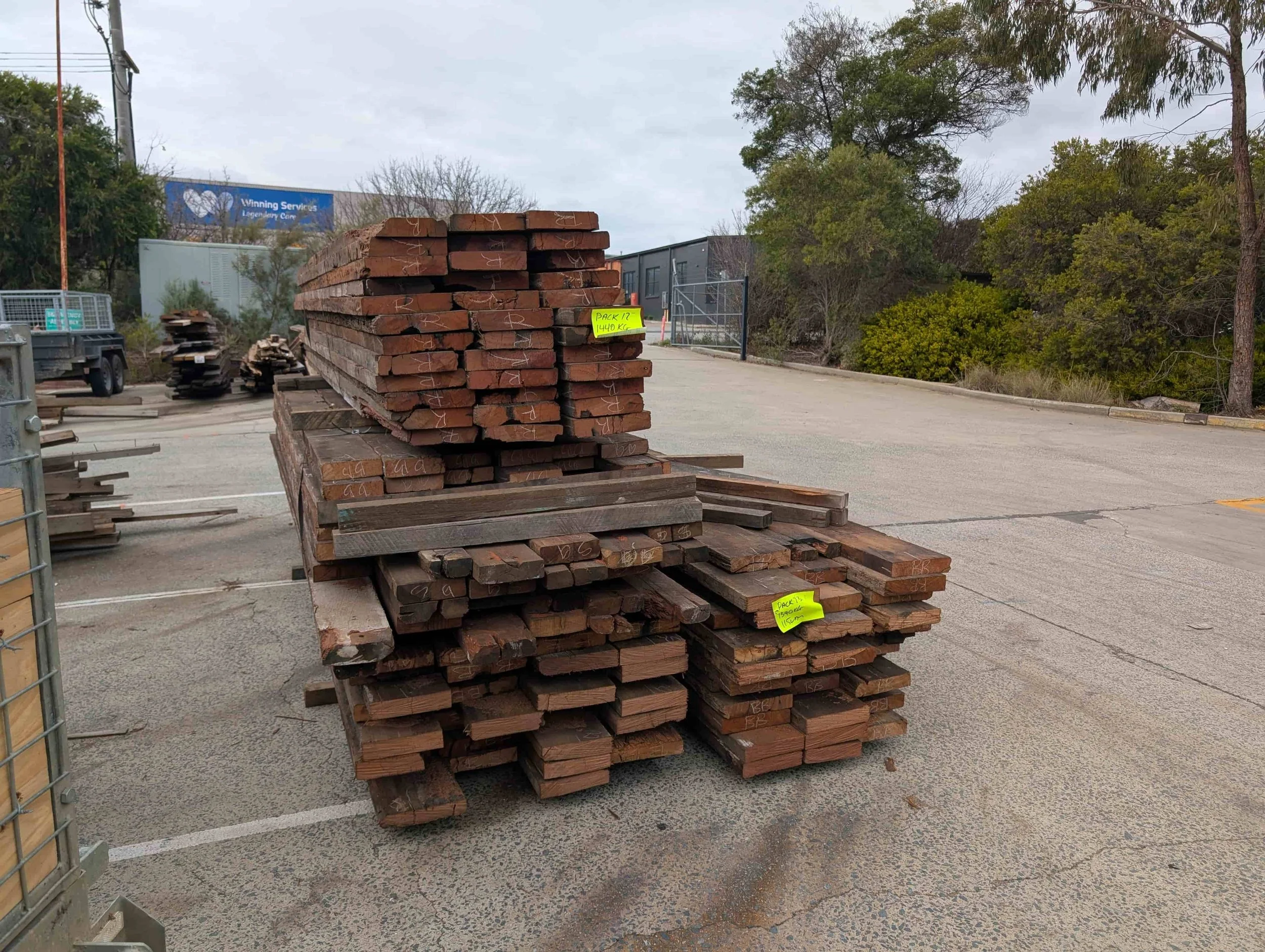
A major new batch of timber has just landed at our Griffith workshop, salvaged from the recent demolition of 32 Assembly Street in Salisbury, Queensland. Built between 1941 and 1942, this address was a core piece of the Rocklea Munitions Works (RMW)—the only government-owned ammunition plant constructed in Queensland during World War II. At its peak, this was a highly restricted, 24-hour manufacturing zone operating right on the frontline of the Pacific war effort.
Staff at a munitions factory in Salisbury 1939-1945. State Library of Queensland.
Aerial view of the Rocklea Munitions Works, notice the river painted on the most Northern building. State Library of Queensland.
Hidden in Plain Sight: The Rocklea Munitions Works
Step back to early 1941. The war in the Pacific was escalating rapidly, and Australia desperately needed to bolster its northern defenses. The Commonwealth took over 100 acres of flat poultry farms in Salisbury and embarked on one of the largest, most secretive construction projects in Queensland’s history: the Rocklea Munitions Works (RMW).
The vast footprint of 32 Assembly Street housed what was known as Building No. 1: The Small Arms Ammunition (SAA) Case and Assembly Shop.
Positioned at Australia's northernmost frontier of defence manufacturing, this facility operated under maximum security and intense pressure. Between 1942 and 1943, the workforce here operated 24 hours a day to churn out more than 137 million rounds of small arms cartridges and over 1.2 million heavy brass cases for the iconic Ordnance 25-pounder field guns.
Because Brisbane was within striking distance of enemy air raids, the very roof above this floor was painted with deceptive camouflaged parklands and rivers to fool enemy pilots flying overhead.
The "Munitionettes" and the Heavy Machinery
A female worker machining 25 pounder shells (State Library of Victoria).
Who walked these floors? With thousands of men deployed overseas, the heartbeat of the SAA Case and Assembly Shop belonged to women. Affectionately known as the "Munitionettes," women made up more than two-thirds of the 3,000-strong workforce.
They stepped out of domestic life and straight into a grueling, high-pressure environment. The factory floor was packed with rows of heavy-duty production lathes and high-tonnage hydraulic draw presses. Working in intense eight-hour rotations—and often back-to-back double shifts when the threat of invasion peaked in 1942—these women oversaw machines that forced, cut, and stamped solid metal under immense hydraulic stress.
The conditions were loud, slick with machinery lubricants, and constantly vibrating. The stakes were absolute: a single slip in precision or a rogue friction spark could spell catastrophe for the entire complex.
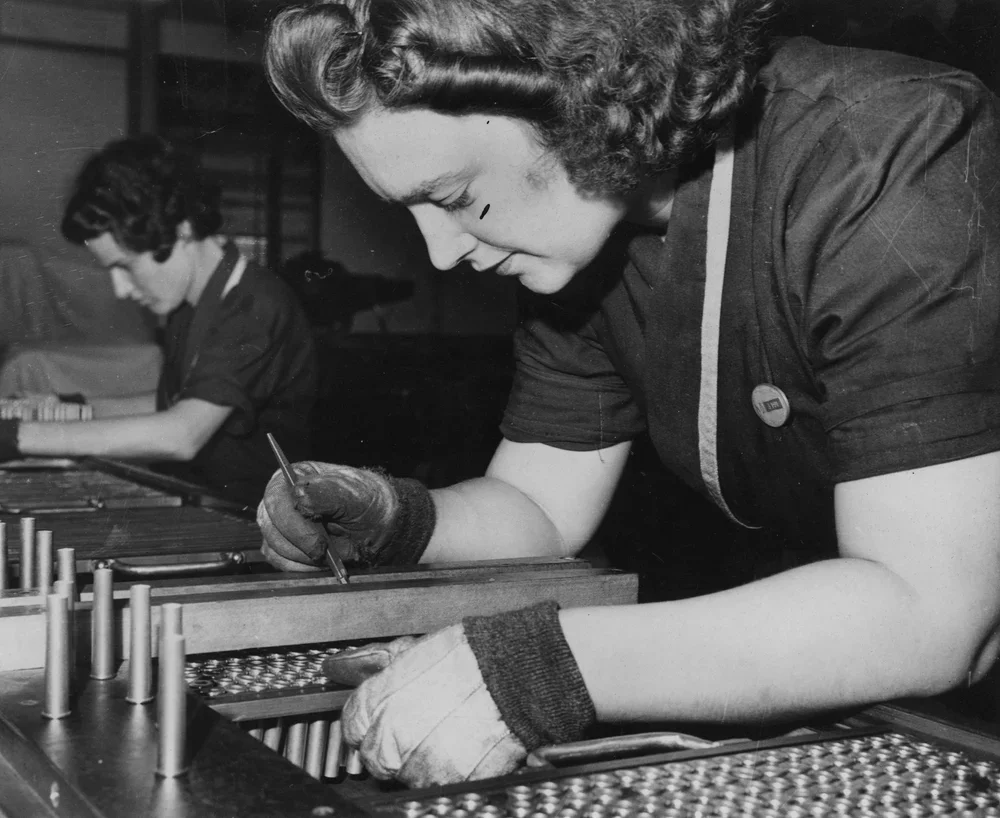
Women assembling cartridges at the Rocklea munitions factory (National Library of Australia).
Engineered to Absorb History
Normally, a massive factory floor of this scale (spanning over 130,000 square feet) would be laid entirely with rigid concrete. But the engineers of 1941 knew that the relentless, 24/7 pounding of heavy presses would shatter standard concrete over time. Furthermore, steel reinforcement was in critically short supply as every scrap was prioritised for weapons and tanks.
Their solution was a masterclass in wartime engineering: they turned to Australia's premium, ultra-dense native hardwoods.
Engineers laid wide, heavy hardwood timber boards at regular intervals between large sections of concrete. These timber bands acted as structural shock absorbers, deadening the violent vibrations of the hydraulic presses and providing a tough, non-sparking "safe zone" where heavy tools and brass shell casings could be handled without risk.
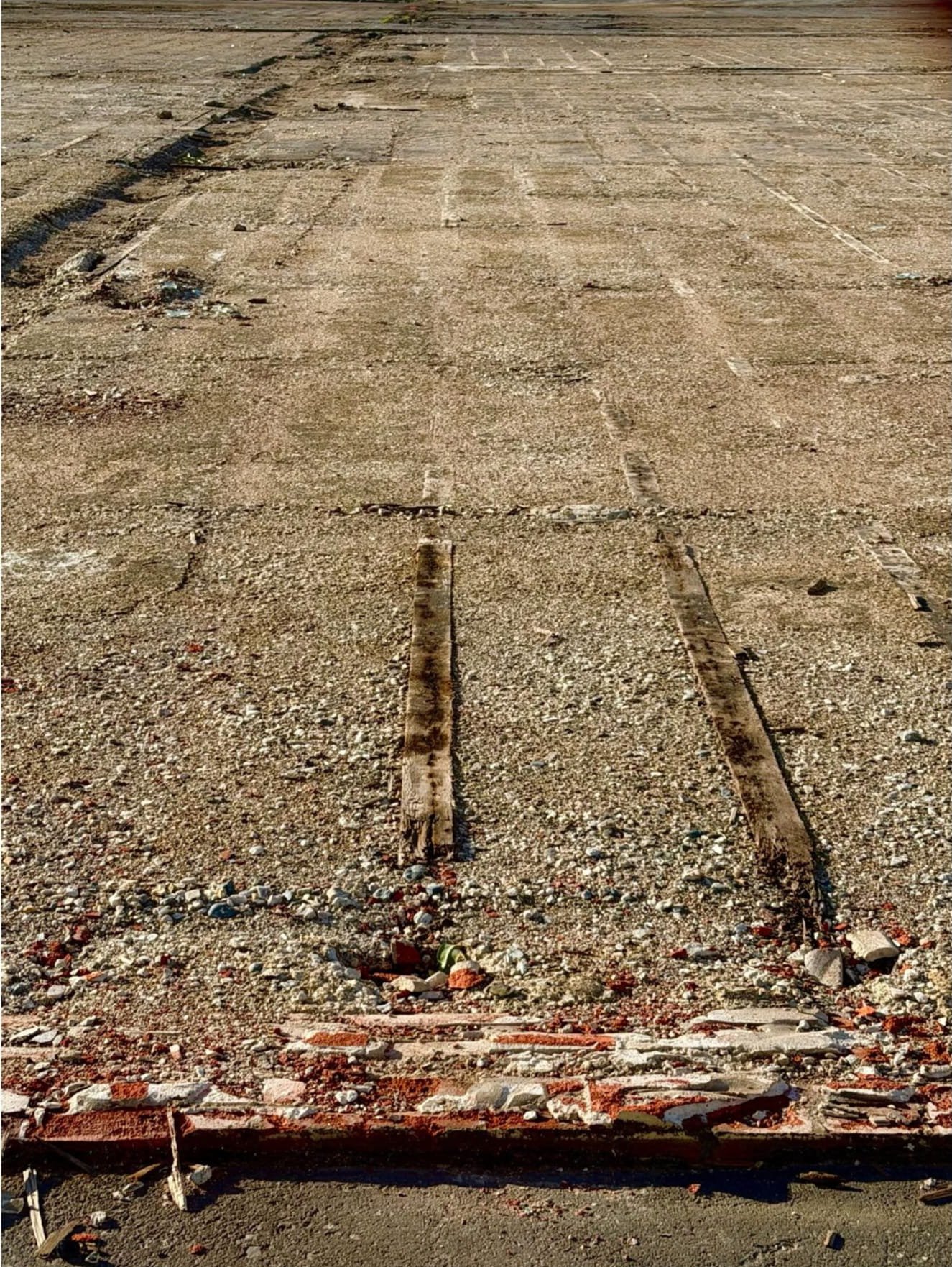
Hardwoods Engineered for the Big Spans
While the floors absorbed the shock, high up above the machinery the roof framing had to do something equally impressive: provide a massive, clear-span workspace free of dense columns so that heavy machinery and overhead crane tracks could move without obstruction.
To achieve this in 1941, engineers couldn’t rely on structural steel framing, which was in critically short supply and strictly prioritized for weapons and tanks. Instead, they once again, turned to Australia's premium, ultra-dense native hardwoods.
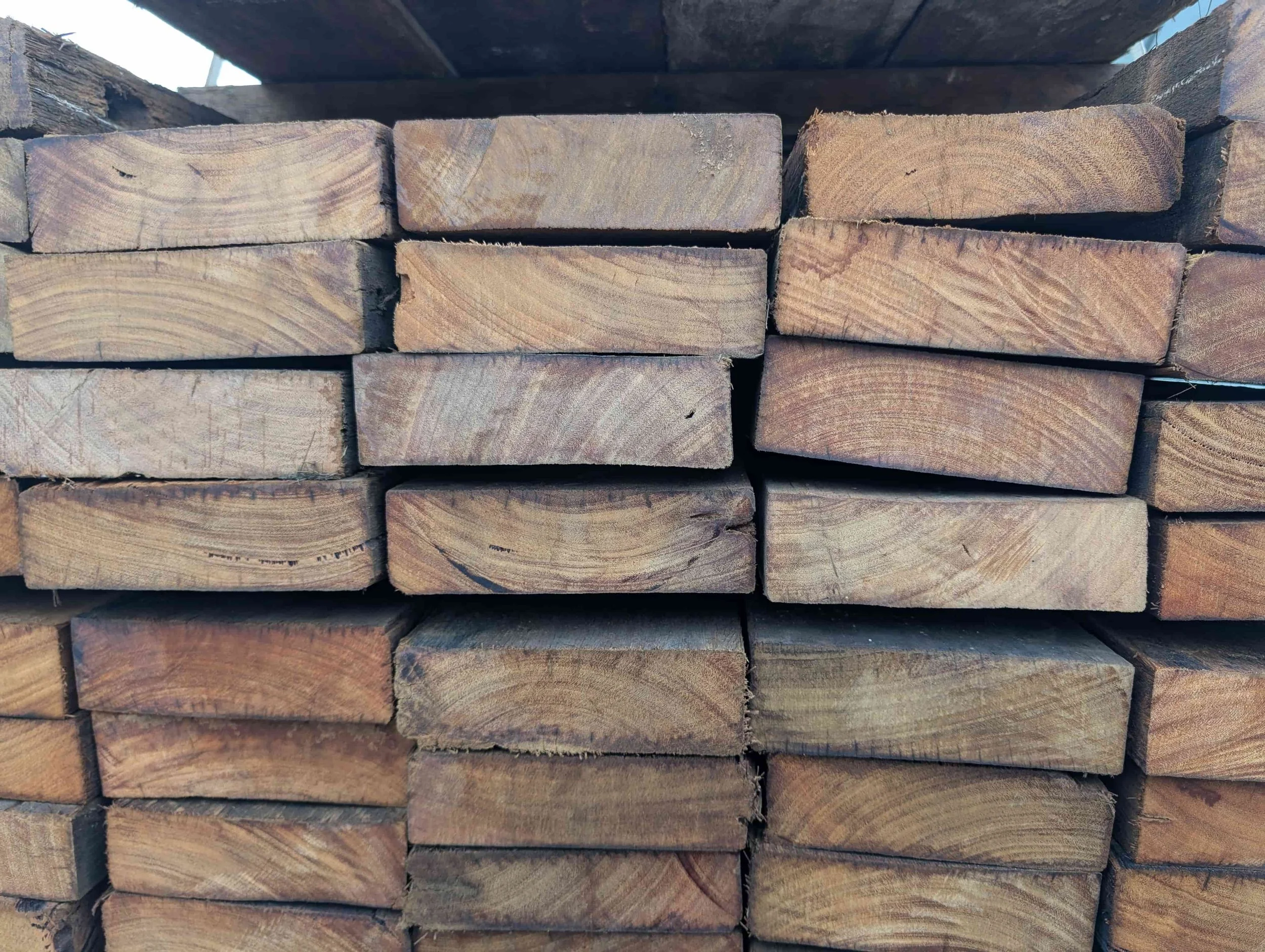
By using species like Spotted Gum, Ironbark, and Blackbutt, builders were able to construct heavy-duty roof trusses and purlins capable of spanning the distances required while carrying the structural loads. For more than 80 years, these timbers held up the roof through the vibrations of the war, a post-war era as a textile spinning mill, and the building's final decades as a commercial hub.
The Sourced Salvage: What’s in the Yard
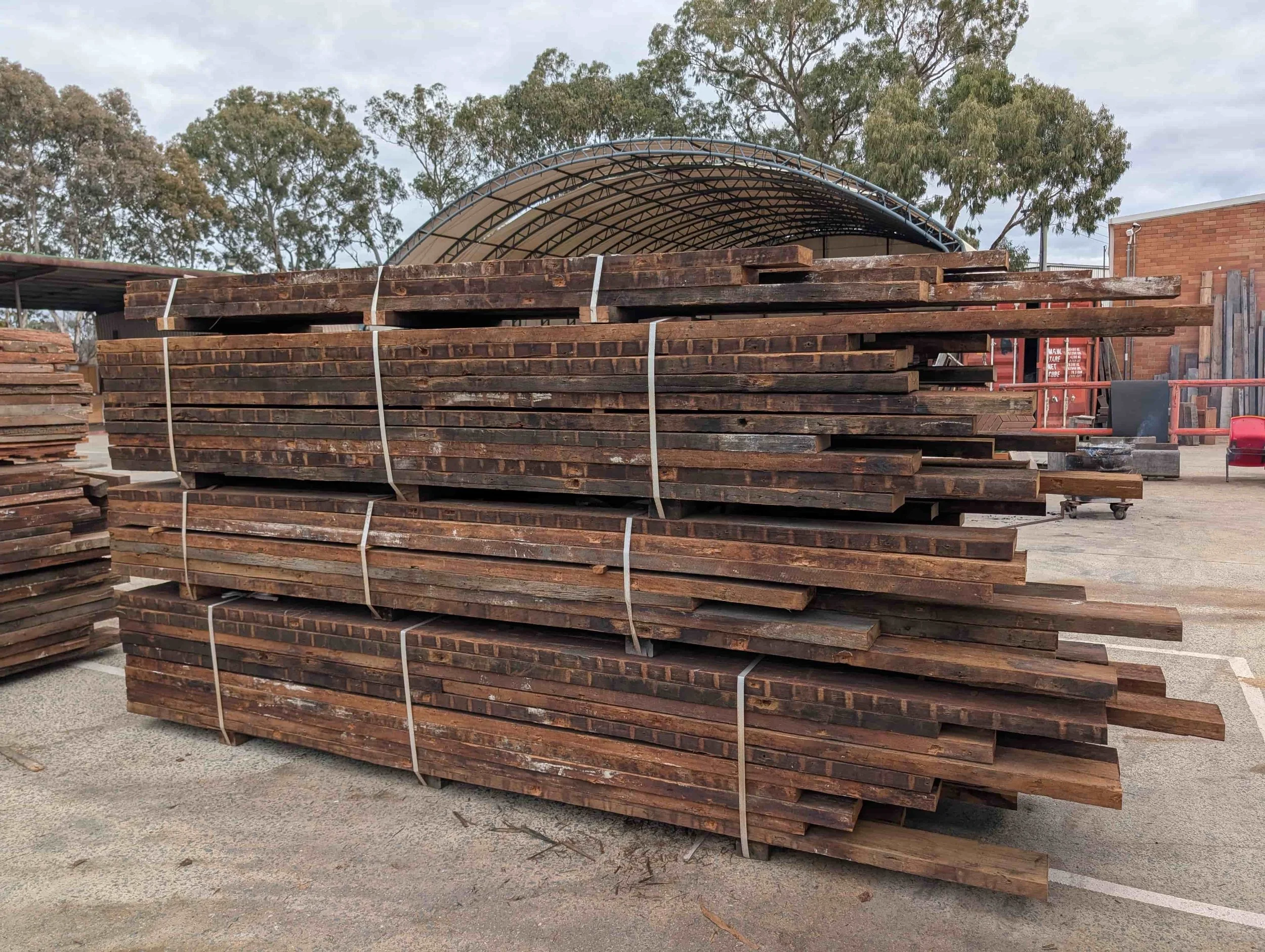
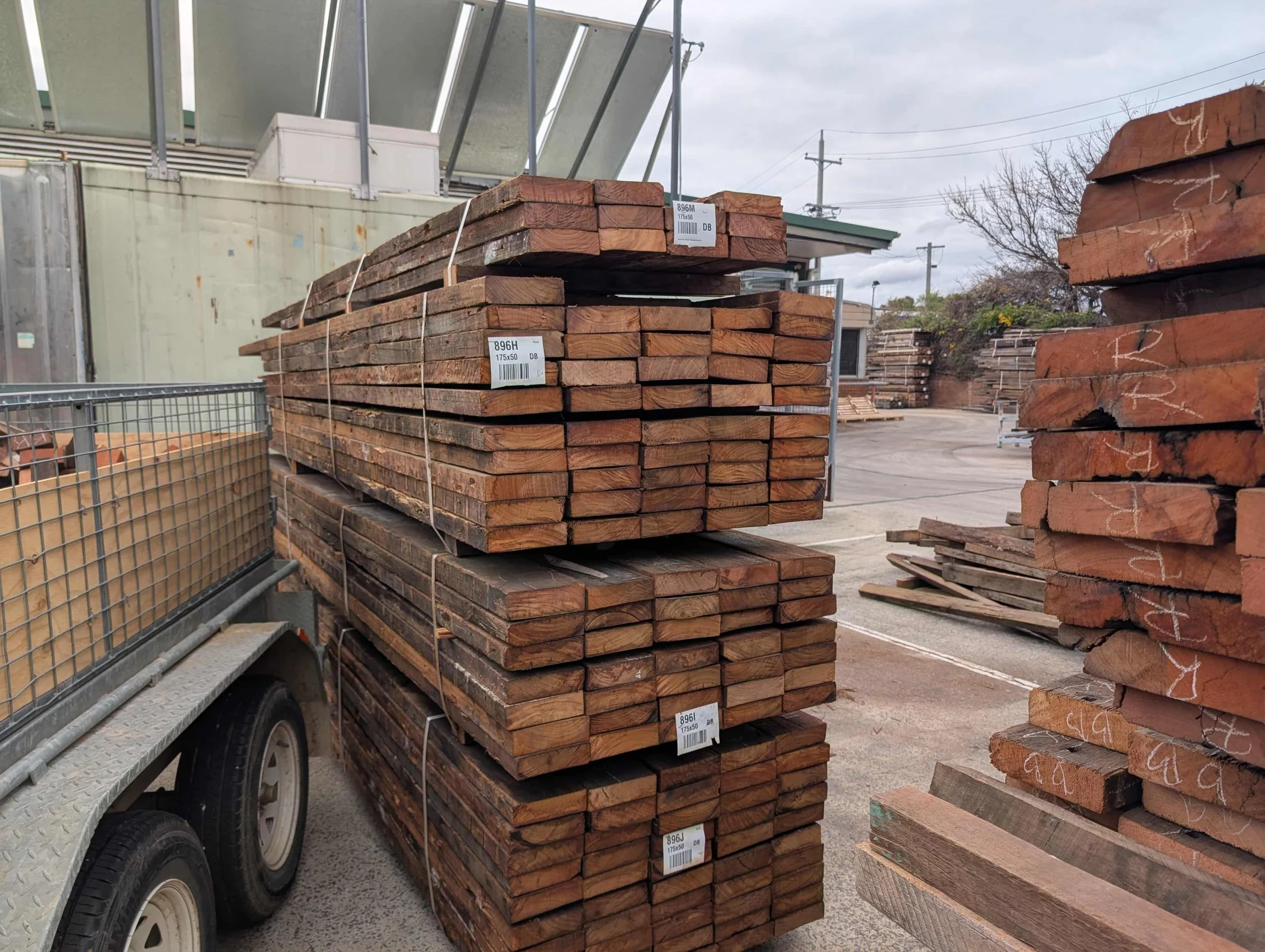
Now, the roof timbers of this incredible industrial bedrock have made their way to our workshop to be given a second life. Here are the raw specifications of the batch we've recovered:
Timber Species: Blackbutt, Ironbark & Spotted Gum
Dimensions & Lengths: 150x25mm, 175x50mm, 175x75mm & 250x50mm in mostly 3-4m lengths (after docking damaged ends)
Recommended Future Uses: These timbers are perfect for pergola timbers, exposed beams, iconic custom dining tables, heavy-duty kitchen benchtops, feature shelving, or architectural cladding with a history and a true story to tell.
Contact Us Today
By salvaging and repurposing these incredible rafters, we aren’t just keeping high-quality timber out of landfill—we are making sure the grit, resourcefulness, and memory of the Salisbury Munitionettes lives on for generations.
Whether you're designing a statement dining table, exposed structural beams, a kitchen benchtop or an outdoor entertaining space, this batch offers the rare opportunity to build with timber that played a role in one of Australia's most significant wartime manufacturing efforts.
If you'd like to view the timber or discuss a custom project, visit our Griffith workshop or get in touch with our team. We'd be happy to help you transform a piece of Australian history into something that will be treasured for decades to come.